Growing Cannabis at Home: A Beginner’s Guide to the Essentials
Growing cannabis at home begins with understanding the plant, choosing suitable genetics, and creating a stable environment. For beginners, learning the fundamentals before making complicated changes can make plant development much easier to understand.
Cannabis genetics, growing environment, moisture, light, temperature, and root health can all influence how a plant develops. Whether you are researching indoor or outdoor cultivation, a strong foundation starts with knowing what type of seed you have and what characteristics to expect.
Before cultivating cannabis, always check the laws that apply in your location. In the United States, the 2018 Farm Bill established a federal framework for hemp and defines hemp using a threshold of no more than 0.3% delta-9 THC on a dry-weight basis. Cannabis laws and cultivation requirements can differ by jurisdiction.
Growing Cannabis at Home Starts With Choosing the Right Seeds
Seed genetics influence many important characteristics of a cannabis plant.
When researching cannabis seeds, you may encounter terms such as:
- Feminized
- Regular
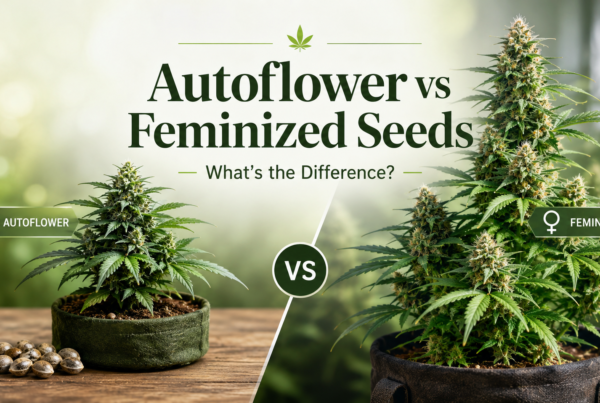
- Autoflowering
- Photoperiod
- Indica
- Sativa
- Hybrid
Understanding these terms helps you compare varieties more accurately.
Feminized seeds are bred to greatly increase the likelihood of producing female plants, while regular seeds can develop into male or female plants.
Autoflowering describes a different characteristic: how the plant transitions toward flowering.
When selecting seeds, consider the genetics, expected plant structure, flowering characteristics, and general lifecycle rather than choosing based only on a strain name.
Indoor vs. Outdoor Cannabis Growing
Another important consideration when growing cannabis at home is deciding between an indoor and outdoor environment.
Both approaches have advantages and limitations.
Indoor Growing
An indoor environment may provide greater control over variables such as:
- Lighting
- Temperature
- Air circulation
- Available space
- Environmental stability
However, indoor growing can also require more equipment and energy.
Your growing area should provide enough space for plant development while allowing adequate airflow and access for regular observation.
For more information, read our guide to creating a successful cannabis cultivation space.
Outdoor Growing
Outdoor plants can make use of natural sunlight and environmental conditions.
This can reduce dependence on artificial lighting, although growers have less control over weather, temperature changes, pests, and other environmental factors.
If you are comparing the two approaches, see our guide to the advantages of growing cannabis outdoors.
The right option depends on available space, climate, budget, local regulations, and the genetics being considered.
Essential Factors for Growing Cannabis at Home
Successful plant development depends on several environmental factors working together.
Rather than focusing on one variable, beginners should consider the entire growing environment.
1. Growing Medium and Root Environment
The growing medium supports the roots and influences moisture, aeration, and nutrient availability.
Different horticultural systems use soil-based, coco-based, or other growing media.
Whatever medium is used, root health remains important.
Roots need access to both moisture and oxygen. Constantly saturated conditions can create problems just as excessively dry conditions can stress plants.
2. Light
Plants rely on light for photosynthesis and development.
The amount and intensity of light can influence overall plant structure and health.
Too little light may contribute to weak or stretched development, while excessive intensity can create visible plant stress.
Lighting requirements can also vary depending on genetics and plant stage.
3. Temperature
Stable environmental conditions generally make plant development easier to observe.
Large or sudden temperature changes can stress plants and affect other factors such as moisture use.
JG Seeds has a more detailed guide on temperature considerations for cannabis plants.
4. Water and Moisture
Water is essential, but more water does not automatically result in a healthier plant.
Both excessive and insufficient moisture can create visible symptoms.
Instead of following a rigid watering routine, consider the condition of the growing medium, root environment, plant size, and overall appearance.
5. Air Circulation
Air movement is another important part of the plant environment.
A stagnant growing area can create unfavorable conditions, while appropriate circulation contributes to a more stable environment around the leaves and stems.
Understanding the Cannabis Plant Lifecycle
A beginner’s cannabis growing guide is easier to understand when the plant’s lifecycle is divided into general stages.
Germination and Early Development
Germination marks the beginning of plant development.
Once a viable seed begins growing, the young seedling starts establishing its root system and developing its first leaves.
Young plants can be particularly sensitive to environmental changes, making consistency important during early development.
Vegetative Development
During vegetative growth, the plant focuses primarily on developing roots, stems, branches, and foliage.
This is when plant structure becomes increasingly visible and genetic differences between varieties may become easier to recognize.
Reproductive Development
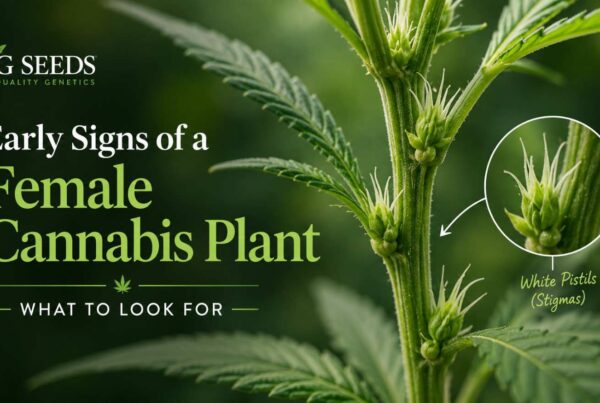
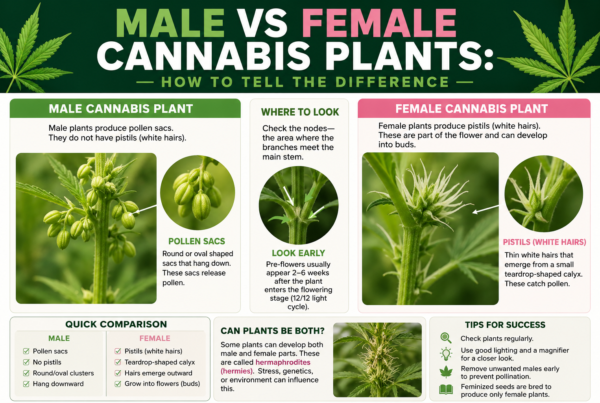
As cannabis plants mature, reproductive characteristics become more noticeable.
Depending on genetics, plants may develop male or female reproductive structures.
Understanding plant sex is especially useful when working with regular seeds.
Plant Maturity
Later plant development varies considerably according to genetics and environmental conditions.
Rather than relying exclusively on a fixed timeline, observe how the individual plant develops.
Watch the Plant, Not Just the Calendar
One of the best habits when growing cannabis at home is learning to observe plants carefully.
Changes in leaves and growth can provide clues about environmental stress.
Watch for:
- Yellowing leaves
- Curling or drooping foliage
- Unusual spots
- Changes in new growth
- Visible pest activity
- Significant changes in plant vigor
A single unusual leaf does not always indicate a serious problem.
Look for patterns across the plant and consider whether watering, temperature, lighting, or another environmental condition recently changed.
Avoid Changing Too Many Things at Once
Beginners often react to a plant problem by changing water, nutrients, lighting, and environmental conditions simultaneously.
That can make diagnosis more difficult.
Instead, identify the most likely issue, observe how the plant responds, and maintain as much environmental consistency as possible.
This approach helps you learn what individual plant symptoms actually mean.
Keep Plant Health Simple
You do not need to make cannabis plant care unnecessarily complicated.
Focus on the fundamentals:
- Start with suitable genetics
- Understand your growing environment
- Maintain environmental stability
- Pay attention to root-zone moisture
- Provide appropriate light
- Maintain adequate air circulation
- Observe leaves and new growth
- Respond carefully to visible problems
These fundamentals are more valuable than constantly adjusting a plant according to a complicated schedule.
Choosing the Right Growing Approach
There is no single method that is appropriate for every person interested in growing cannabis at home.
Indoor and outdoor environments each have different advantages. Seed types also differ significantly in their genetics and developmental characteristics.
Before making a choice, consider:
- Available space
- Local climate
- Seed genetics
- Plant structure
- Indoor or outdoor environment
- Time and resources
- Applicable laws
Learning about the individual genetics before starting can help you develop realistic expectations about the plant.
Final Thoughts on Growing Cannabis at Home
Growing cannabis at home is easier to understand when you focus first on plant biology and environmental fundamentals.
Seed genetics influence flowering characteristics, plant sex, structure, and lifecycle, while environmental factors such as light, moisture, temperature, airflow, and root conditions influence plant health.
For beginners, observation and consistency are especially valuable. Learn what normal development looks like, avoid making unnecessary changes, and pay attention to patterns rather than reacting immediately to individual leaves.
A strong understanding of cannabis seeds and plant development provides a much better foundation for learning about cultivation.
Frequently Asked Questions About Growing Cannabis at Home
What should beginners learn first about growing cannabis at home?
Start by understanding cannabis seed types, plant genetics, the growing environment, light, moisture, temperature, and basic plant development.
Is indoor or outdoor cannabis growing better?
Neither option is universally better. Indoor environments provide greater environmental control, while outdoor environments make use of natural conditions. The appropriate approach depends on space, climate, resources, and applicable laws.
What type of cannabis seeds are suitable for beginners?
Feminized and autoflowering seeds are commonly researched by beginners because they offer specific predictable characteristics. However, the genetics of the individual strain remain important.
Why do cannabis leaves turn yellow?
Yellow leaves can have several possible causes, including natural aging, moisture problems, environmental stress, root conditions, or nutrient-related issues.
Why is environmental stability important?
Plants respond to changes in temperature, light, moisture, and airflow. Maintaining relatively stable conditions makes plant development and potential problems easier to observe.