
Learning how to maximize yield with feminized seeds starts with understanding what feminized genetics actually provide. Feminized cannabis seeds are bred to greatly increase the likelihood of producing female plants, which can make crop planning more predictable and reduce the time spent identifying unwanted male plants.
However, feminized seeds alone do not guarantee a large harvest. Genetics, plant health, environmental stability, available space, root conditions, and overall crop management all influence the final result.
Choosing strong genetics and maintaining consistent conditions are therefore just as important as selecting feminized seeds in the first place.

Why Growers Choose Feminized Cannabis Seeds
Traditional regular cannabis seeds can develop into either male or female plants.
Feminized seeds are produced through breeding methods intended to result overwhelmingly in female offspring. This makes them attractive to growers who specifically want female plants.
Some of the main advantages include:
- Greater predictability of plant sex
- Less space spent on unwanted male plants
- More efficient use of growing resources
- Easier crop planning
- Wide availability across many cannabis strains
For a more detailed explanation, read our guide to the benefits of feminized seeds.
It is important, however, to avoid thinking of feminized seeds as a guarantee of maximum yield. They provide a genetic advantage in terms of plant sex, but environmental and genetic differences still influence how individual plants develop.
Feminized Seeds vs Regular Seeds
The primary difference between feminized and regular seeds relates to the probability of plant sex.
Regular seeds may develop into male or female plants, while feminized genetics are bred primarily toward female offspring.
This can make feminized seeds more practical when the goal is to use available growing space efficiently.
If you are deciding between the two, see our complete guide to Feminized Seeds vs Regular Seeds.
How Genetics Influence Feminized Seeds Yield
Genetics are one of the most important factors affecting plant characteristics.
Two feminized strains can behave very differently.
Depending on the variety, genetics may influence:
- Plant structure
- Growth pattern
- Flowering characteristics
- General lifecycle
- Environmental tolerance
- Aroma and terpene profile
- Cannabinoid characteristics
- Potential plant size
For this reason, selecting feminized seeds based only on popularity or strain name may not provide the best match.
Review the characteristics of the individual variety and consider whether they suit the environment and available growing space.
1. Start With Quality Feminized Genetics
If you want to maximize yield with feminized seeds, begin with healthy, well-developed genetics from a reliable source.
Seed quality can influence early plant development and overall consistency.
Look for clear information about:
- Genetic background
- Seed type
- Breeder information
- Expected plant characteristics
- Feminized or regular classification
- Autoflower or photoperiod genetics
Understanding what you are starting with makes it easier to set realistic expectations.
2. Understand Autoflower vs Feminized Seeds
Autoflowering and feminized are not opposite seed categories.
The terms describe different characteristics.
Feminized primarily refers to plant sex.
Autoflowering primarily refers to flowering behavior.
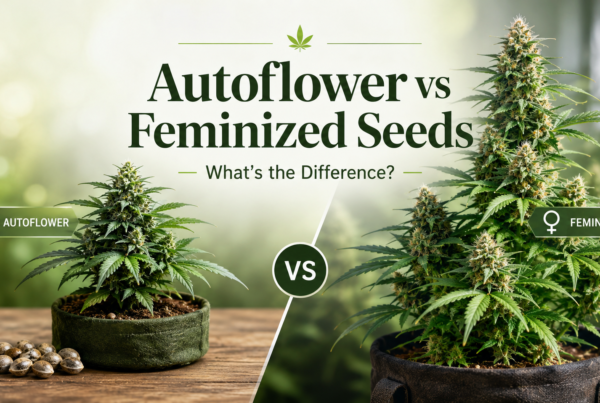
A cannabis seed can therefore be both autoflowering and feminized.
This distinction is important because autoflower and photoperiod genetics may develop differently.
Read our Autoflower vs Feminized Seeds guide for a more detailed comparison.
3. Maintain a Stable Growing Environment
Healthy plants generally perform better when environmental conditions remain relatively stable.
Sudden changes can create stress and interfere with normal development.
Important environmental factors include:
- Light
- Temperature
- Air circulation
- Moisture
- Root-zone conditions
- Available growing space
Instead of constantly making adjustments, observe how plants respond and avoid changing multiple variables simultaneously.
Environmental consistency also makes it easier to identify the cause of a problem if symptoms appear.
4. Pay Attention to Root Health
Healthy foliage begins with a healthy root environment.
Roots need access to both moisture and oxygen.
Growing conditions that remain excessively saturated can reduce oxygen availability around the roots, while very dry conditions can create their own stress.
Root stress can sometimes produce symptoms that resemble nutrient deficiencies.
For that reason, growers should examine the entire plant environment before automatically assuming that unusual leaf color requires more nutrients.
5. Provide Balanced Plant Nutrition
Cannabis plants require nutrients for normal biological processes, but more nutrients do not automatically produce more growth.
Excessive feeding may create stress, while insufficient nutrient availability can also affect development.
Instead of focusing solely on the amount of nutrients being provided, watch how the plant responds.
Common warning signs can include:
- Yellow leaves
- Brown leaf tips
- Curling
- Unusual spotting
- Very dark foliage
- Reduced plant vigor
A balanced approach is generally more useful than repeatedly adding nutrients whenever a plant develops discoloration.
6. Use Available Space Efficiently
Another advantage of feminized genetics is improved predictability when planning available growing space.
Because feminized seeds are bred primarily toward female plants, less space may be spent maintaining plants that later prove to be male.
Plant spacing also affects:
- Light exposure
- Air circulation
- Access for inspection
- Competition between plants
Crowded plants can make it harder to observe individual plant health.
The objective should be healthy plant development rather than simply fitting the maximum possible number of plants into an area.
7. Monitor Plants Throughout Their Lifecycle
One of the best ways to maximize yield with feminized seeds is to identify potential plant-health problems early.
Regularly inspect:
- Older leaves
- New growth
- Leaf edges
- Nodes
- Stems
- Root-zone moisture
- Upper and lower leaf surfaces
Changes in leaf color, shape, or vigor can provide clues about what is happening.
Photographs taken over several days can also help show whether a symptom is improving or spreading.
8. Understand Plant Sex Even When Using Feminized Seeds
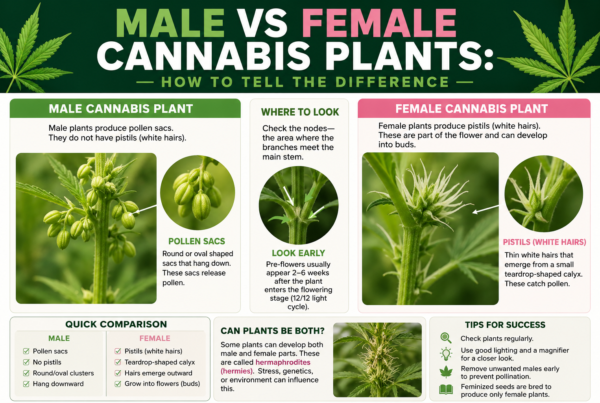
Feminized seeds greatly increase the probability of female plants, but understanding cannabis reproductive structures is still valuable.
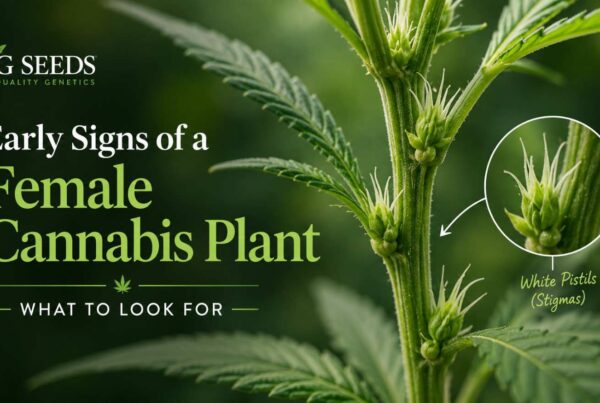
Female plants typically develop flower structures with fine white stigmas, while male plants develop pollen-producing structures.
Environmental stress and genetics can sometimes influence reproductive expression as well.
Research into cannabis sex determination has shown that Cannabis sativa has a complex system of sex determination and expression.
You can also see our visual guide to Male vs Female Cannabis Plants.
9. Avoid Stress and Sudden Changes
Plant stress can interfere with normal development.
Potential stressors may include rapid changes in:
- Temperature
- Light exposure
- Moisture
- Root conditions
- Environment
Instead of trying to constantly “push” plants for greater growth, maintaining healthy and predictable conditions can often be more productive.
Plant genetics establish potential, but environmental conditions influence how effectively that potential is expressed.
10. Observe Before Trying to Fix a Problem
A common mistake is reacting too quickly to plant symptoms.
For example, yellow leaves may be associated with many different causes, including:
- Natural aging
- Watering issues
- Root stress
- Nutrient-related problems
- Temperature
- Light stress
- Pests
Changing several things simultaneously can make it difficult to determine which factor caused the problem.
Observe where symptoms begin, whether they affect old or new growth, and how rapidly they spread before deciding what needs attention.
Challenges Associated With Feminized Seeds
Feminized genetics offer important advantages, but they should not be treated as completely risk-free.
Feminized Seeds Are Not a 100% Guarantee
Properly produced feminized seeds are intended to develop overwhelmingly into female plants, but absolute guarantees should be avoided.
Genetics and environmental conditions can influence plant development.
Stress Can Influence Sex Expression
Some cannabis plants can develop both male and female reproductive structures.
Genetics may influence this tendency, while environmental stress can also play a role.
Regular observation is therefore useful even when growing feminized genetics.
Feminized Seeds Can Cost More
Feminized seeds may cost more than some regular seeds because of the breeding process involved.
For many buyers, however, the increased predictability of plant sex can justify the difference.
The value ultimately depends on the buyer’s purpose and priorities.
How to Maximize Yield with Feminized Seeds: Key Takeaways
Feminized seeds can make cannabis cultivation more predictable, but plant sex is only one part of overall crop performance.
To make the most of feminized genetics:
- Choose suitable genetics
- Understand the seed type
- Maintain environmental stability
- Support healthy root development
- Avoid excessive feeding
- Use available space efficiently
- Observe plants regularly
- Avoid unnecessary stress
- Identify problems before making major changes
No single technique guarantees a particular yield.
The best results come from combining strong genetics with careful observation and a healthy plant environment.
Final Thoughts
The ability to maximize yield with feminized seeds depends on much more than selecting a seed labeled “feminized.”
Feminized genetics can improve predictability by greatly increasing the likelihood of female plants, allowing available space and resources to be used more efficiently.
However, genetics, plant health, environmental stability, root conditions, and overall care continue to influence plant development.
Start with reliable genetics, understand the characteristics of the strain, monitor plants carefully, and focus on consistency rather than constantly changing conditions.
Used appropriately, feminized cannabis seeds can provide a more predictable foundation for growers seeking healthy, uniform plants.
Frequently Asked Questions About Feminized Seeds and Yield
Do feminized seeds produce higher yields?
Feminized seeds do not automatically guarantee higher yields. Their primary advantage is the increased likelihood of female plants, which can make available space and resources more efficient.
Are feminized seeds always female?
Feminized seeds are bred to produce overwhelmingly female plants, but it is better to avoid treating this as an absolute guarantee.
Are feminized seeds better than regular seeds?
Neither is universally better. Feminized seeds offer greater predictability of plant sex, while regular seeds may be preferred for certain breeding purposes.
Can autoflower seeds also be feminized?
Yes. Autoflowering and feminized describe different genetic characteristics, so a seed can carry both traits.
What affects the yield of feminized cannabis plants?
Genetics, plant health, environment, available space, root conditions, moisture, light, nutrition, and other factors can all influence plant development and eventual yield